Getting Your Pool Ready for a South Carolina Summer
The heat doesn't ease into the Lowcountry. It just shows up one day in late April and doesn't leave until October. Down here, pools run year-round, which is one of the best things about living on the coast. But as the season shifts and weekends start filling up again, a focused spring check-in pays dividends all summer long. We've walked through this with hundreds of clients over the years, and the ones who spend an afternoon on it in the spring spend their summer actually swimming.
Start with the water, not the equipment
Before you run anything, pull a water sample and get it tested. Most pool supply stores do it free, and it tells you exactly what, if anything, needs adjusting before you start.
| Parameter | Target Range | Why It Matters |
|---|---|---|
| pH | 7.2 – 7.6 | Outside this range, chlorine loses effectiveness fast |
| Total Alkalinity | 80 – 120 ppm | Keeps pH stable between adjustments |
| Calcium Hardness | 200 – 400 ppm | Protects your interior finish long-term |
| Free Chlorine | 1 – 3 ppm | The actual sanitizer keeping water safe |
| Cyanuric Acid (stabilizer) | 30 – 50 ppm | Shields chlorine from SC's intense UV |
If the chemistry has drifted through the quieter winter months, a shock treatment gets things back on track quickly. Do it after dark. UV neutralizes chlorine fast in direct afternoon sun, so you want it working overnight. Give it a day or two, and your water should be right where it needs to be.
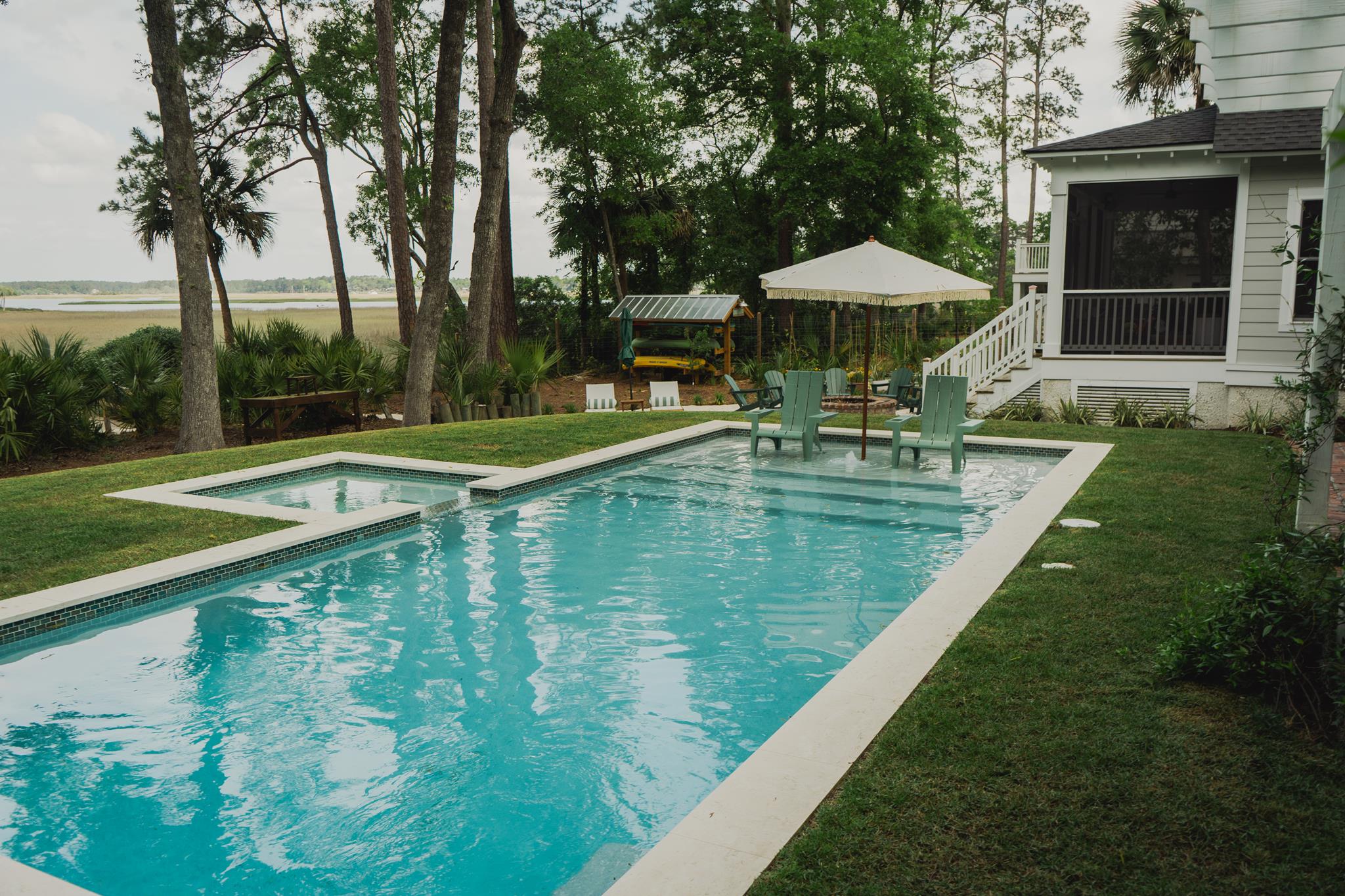
Pollen season is a real thing here
April into early May in the Lowcountry means pine pollen, and it can cloud a pool and clog a filter in a day. This one catches people off guard every year. During pollen season, run your filter longer than usual: 10 to 12 hours instead of the normal 6 to 8. Check the skimmer and pump baskets every couple of days, and give your filter a proper clean while you're at it.
A clogged filter doesn't just affect water clarity — it puts extra strain on your pump and slows everything down. Stay on top of it for a few weeks during peak pollen and the water stays sparkling while everything else in the yard turns yellow.
Give the equipment a quick once-over
Twenty minutes on an equipment check now prevents surprises in July when the pool is running hard every day.
Listen to the pump when it starts. Any new noise, a rattle, a louder hum than usual, is worth looking at before it becomes a problem. Pumps are straightforward to service early and significantly less fun to deal with on a busy summer weekend.
If you have a salt cell, pull it and check the plates for calcium scaling. A quick acid rinse restores it to full efficiency. A clean cell keeps your chemistry consistent all season with very little effort from you. If it's been a few seasons, check whether it's due for replacement — the cell itself will usually tell you with lower output before it quits entirely.
Check your robotic vacuum or auto-cleaner. Clear any debris, make sure everything moves freely, and run it through a cycle. Starting summer with a clean pool floor is a genuinely nice thing.
Brush, vacuum, and let it run
Brush the walls and floor thoroughly, then vacuum. Run your filtration continuously for at least 24 hours. One solid cycle is usually enough to bring the water from good to great.
If after 48 hours the chemistry won't stabilize or the clarity isn't there, that's the moment to call a professional. Sometimes the right tools and experience sort things out faster than another trip to the pool store.
Worth keeping an eye on: More than a quarter inch of water loss per day typically means a leak somewhere, not evaporation. In spring, when evaporation rates are lower, the water level is an easy thing to monitor. Leaks are almost always simple to fix when caught early — if you're topping off more than usual, it's worth a quick check.
Ready to Get Started?
Have questions about your project? Our team is happy to help — no obligation.
Get A Free Consultation